Plan d’maintenance Chevrolet Metro (MR226)
Logo Chevrolet

Online service book

Generations :Metro (MR226)Metro Sedan (MR226)All →
Logo Chevrolet

📖Chevrolet Metro MR226: simple Japanese engineering wrapped in a Chevy badge

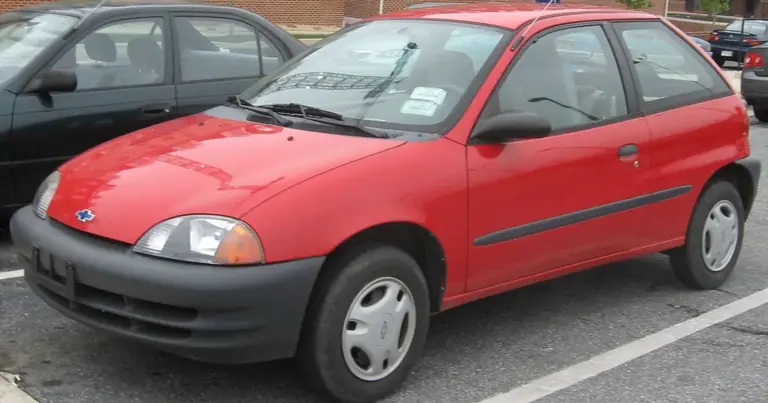
Chevrolet Metro (MR226) (1998-2007)

Derived directly from Suzuki's second-generation Swift architecture, the Chevrolet Metro MR226 is an ultra-lightweight city hatchback built for straightforward urban commuting across the Americas. Powered by modest 1.0-litre three-cylinder or 1.3-litre four-cylinder petrol units, it delivers genuine mechanical frugality provided basic servicing has not been neglected. Diligent Chevrolet Metro maintenance is vital to keep this compact platform running cleanly and reliably.

While the 1.0-litre engine prioritises urban fuel economy, the 1.3 LSi four-cylinder proves far more versatile on faster roads. Both engines feature a simple cambelt arrangement that demands periodic replacement alongside the water pump to prevent unexpected failures. Rust represents the primary threat to the MR226 chassis: sills, jacking points, wheel arches, and floor pans must be inspected carefully, as underbody structural corrosion frequently condemns the car long before mechanical components expire.

Suivi free

Entrez votre number plate d’number plate afin de suivre freeement votre Metro (MR226)

Garajo prépare votre garage et vous permet ensuite de suivre les maintenances, les rappels et les points à surveiller.

UKGB

Owner notes

The reassuring points, known weak spots and deadlines you should not let slip.

Reassuring points

Reliability
  • The lightweight Suzuki-derived architecture ensures exceptional fuel economy and uncomplicated mechanical upkeep.
  • The 1.3 LSi four-cylinder engine offers adequate extra performance over the base 1.0 unit without increasing running costs.
  • Simple electrical systems and straightforward parts access make DIY maintenance and basic repairs remarkably accessible.

Chronic weak spots

Keep an eye on
  • 1.0 and 1.3 petrol engines: renew the cambelt, tensioner, and water pump immediately if replacement history is unrecorded.
  • Underbody corrosion: thoroughly inspect outer sills, jacking points, rear wheel arches, and floor pans for structural rust.
  • Manual gearbox: test for worn second-gear synchros and inspect clutch cable adjustment on high-mileage urban commuters.
  • 1.3 LSi engine: check the rocker cover gasket and spark plug wells for oil leaks, and inspect ignition leads for misfires.
  • Front running gear: inspect wishbone bushes, track rod ends, and anti-roll bar drop links for play over uneven roads.

Critical deadlines

Do not miss
  • Cambelt, tensioner pulley, and water pump must be renewed on schedule to avert roadside breakdowns on both 1.0 and 1.3 units.
  • Underbody rust proofing and immediate corrosion repairs must be prioritised before structural sill deterioration becomes terminal.
  • Braking components, engine mounts, and gear linkage bushings should be refreshed promptly at the first sign of excessive wear.

Fréquences d'maintenance recommandées

Service markers for petrol/diesel versions. Exact intervals vary by engine and model year.

Oil change

Every 15 000 km

Every 1 year

Service

Every 15 000 km

Every 1 year

Brake pads

Every 50 000 km

Every 2 years

Vehicle léger et modeste : usure des number platettes généralement modérée

Timing belt / chain

Every 100 000 km

Every 5 years

Battery (12 V)

Every 50 000 km

Every 4 years

Powertrains and average consumption

Average consumption from manufacturer data for the versions available in this generation.

Petrol and diesel powertrains

Petrol, diesel or LPG versions. The intervals shown cover the usual mechanical jobs.

Estimated average budget

Standard cost

Servicing a Chevrolet Metro (MR226) sits in line with the market average.

Simple oil change~80
Full service~245
Front brake pads~110
Timing-belt kit~650
Tyres (set of 4)~400

* Indicative estimates for parts and labour.

Frequently asked questions about Chevrolet Metro (MR226)

What are the common problems on the Metro (MR226)?
Metro (MR226) owners should especially watch: 1.0 and 1.3 petrol engines: renew the cambelt, tensioner, and water pump immediately if replacement history is unrecorded. Underbody corrosion: thoroughly inspect outer sills, jacking points, rear wheel arches, and floor pans for structural rust. Garajo includes these watch points so you can act early.
When should you change the timing belt on a Metro (MR226)?
The timing belt is usually replaced every 100,000 km or 5 years on this type of engine.
Where can I find the service book for the Chevrolet Metro (MR226)?
Garajo offers a free digital service book, always up to date, with reminders and a detailed history for your Chevrolet Metro (MR226).
How much does it cost to service a Chevrolet Metro (MR226)?
The service budget for a Chevrolet Metro (MR226) sits in line with the market average. Allow about 245 € for a full service, for example. Garajo estimates your budget by powertrain and tracks what you actually spend, for free.
Which Chevrolet Metro (MR226) powertrain is best for town use?
This model is only available as petrol/diesel. Fuel mix: 2 petrol versions. In town, prefer the most economical, well-serviced petrol/diesel version.
Which Chevrolet Metro (MR226) powertrain should you choose if you mostly drive on the motorway?
This model is only available as petrol/diesel. Fuel mix: 2 petrol versions. On the motorway, prefer petrol/diesel versions with the best power-to-consumption compromise.

Compatible engine oil

Which engine oil for Chevrolet Metro (MR226)?

These links are limited to the engines of this generation when oil data is available.

Unsure between two viscosities?5W-30 vs 5W-400W-20 vs 5W-305W-30 vs 0W-30

Ne ratez plus jamais un maintenance

Gérez l'maintenance de votre Chevrolet Metro (MR226) freeement.
Centralise your history and spending in a few clicks.Téléchargez le service book de votre Chevrolet Metro (MR226) en PDF à tout moment.

Créer mon carnet (Free)