Plan d’maintenance Dacia 1310 Combi
Logo Dacia

Online service book

Generations :13101310 CombiAll →
Logo Dacia

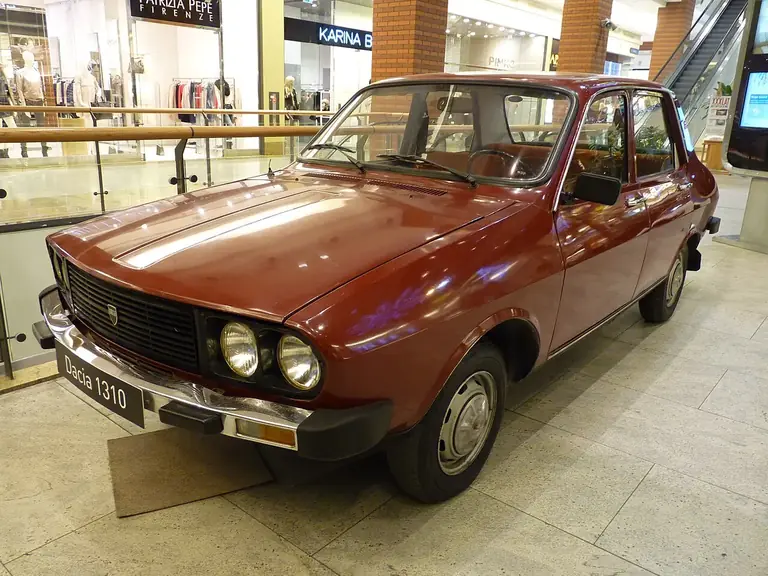
📖Dacia 1310 Combi: the rugged utilitarian estate that worked to the finish

Dacia 1310 Combi (2001-2006)

Remaining in production until 2006, the Dacia 1310 Combi stretched the venerable Romanian estate formula to the very end of its commercial lifespan. Designed to transport families and heavy cargo across unforgiving rural road networks, sensible Dacia 1310 maintenance preserves an exceptionally spacious, mechanically basic workhorse whose low purchase price frequently led previous owners to defer essential preventative upkeep.

Propelled by the durable pushrod 1.4 and 1.6-litre petrol engines, the Combi demands strict attention to thermal management and oil cleanliness. Because these estate models were routinely operated near their maximum gross vehicle weight, thermal stress on the radiator, head gasket and water pump was a regular hazard. Single-point injection systems also require clean fuel delivery and sound electrical earth points to prevent stalling under load.

Suivi free

Entrez votre number plate d’number plate afin de suivre freeement votre 1310 Combi

Garajo prépare votre garage et vous permet ensuite de suivre les maintenances, les rappels et les points à surveiller.

UKGB

Owner notes

The reassuring points, known weak spots and deadlines you should not let slip.

Reassuring points

Reliability
  • Impressive cargo capacity and practical load bay geometry unmatched at this budget price point.
  • Proven Cleon-derived petrol engines with simple pushrod valvetrains that are easy and inexpensive to overhaul.
  • Low mechanical complexity ensuring high repairability even in remote locations with basic hand tools.
  • Independent front suspension and coil-sprung rear axle offering surprisingly compliant unladen ride comfort.

Chronic weak spots

Keep an eye on
  • Rear structural corrosion on 1310 Combi: check spare wheel well, tailgate lip, rear damper mounting turrets and inner wheel arches.
  • Rear suspension load fatigue: inspect rear coil springs for sagging or fractures and check shock absorbers for fluid leaks.
  • Cooling circuit under load: check radiator core condition, water pump weep hole and cooling fan thermoswitch operation.
  • 1.4 and 1.6 fuel injection: verify idle air control valve cleanliness, throttle body vacuum seals and lambda sensor response.
  • Rear drum brakes: inspect wheel cylinders for brake fluid leakage, brake shoe lining thickness and handbrake cable tension.

Critical deadlines

Do not miss
  • Engine oil and filter change every 10,000 km or 12 months using high-zinc mineral or semi-synthetic oil.
  • Valve lash clearance check and adjustment every 20,000 km to guarantee smooth idle and balanced cylinder compression.
  • Cooling system drain, flush and refill every 40,000 km or 24 months to prevent silt build-up in the engine block.
  • Rear suspension and brake overhaul every 50,000 km or 36 months to ensure safe tracking and balanced braking under load.

Fréquences d'maintenance recommandées

Service markers for petrol/diesel versions. Exact intervals vary by engine and model year.

Oil change

Every 15 000 km

Every 1 year

Service

Every 15 000 km

Every 1 year

Brake pads

Every 50 000 km

Every 2 years

Vehicle léger et modeste : usure des number platettes généralement modérée

Timing belt / chain

Every 100 000 km

Every 5 years

Battery (12 V)

Every 50 000 km

Every 4 years

Powertrains and average consumption

Average consumption from manufacturer data for the versions available in this generation.

Petrol and diesel powertrains

Petrol, diesel or LPG versions. The intervals shown cover the usual mechanical jobs.

Estimated average budget

Economical cost

Servicing a Dacia 1310 Combi sits about 13% cheaper than the market average.

Simple oil change~75
Full service~190
Front brake pads~90
Timing-belt kit~500
Tyres (set of 4)~400

* Indicative estimates for parts and labour.

Frequently asked questions about Dacia 1310 Combi

What are the common problems on the 1310 Combi?
1310 Combi owners should especially watch: Rear structural corrosion on 1310 Combi: check spare wheel well, tailgate lip, rear damper mounting turrets and inner wheel arches. Rear suspension load fatigue: inspect rear coil springs for sagging or fractures and check shock absorbers for fluid leaks. Garajo includes these watch points so you can act early.
When should you change the timing belt on a 1310 Combi?
The timing belt is usually replaced every 100,000 km or 5 years on this type of engine.
Where can I find the service book for the Dacia 1310 Combi?
Garajo offers a free digital service book, always up to date, with reminders and a detailed history for your Dacia 1310 Combi.
How much does it cost to service a Dacia 1310 Combi?
The service budget for a Dacia 1310 Combi sits about 13% cheaper than the market average. Allow about 190 € for a full service, for example. Garajo estimates your budget by powertrain and tracks what you actually spend, for free.
Which Dacia 1310 Combi powertrain is best for town use?
This model is only available as petrol/diesel. Fuel mix: 2 petrol versions. In town, prefer the most economical, well-serviced petrol/diesel version.
Which Dacia 1310 Combi powertrain should you choose if you mostly drive on the motorway?
This model is only available as petrol/diesel. Fuel mix: 2 petrol versions. On the motorway, prefer petrol/diesel versions with the best power-to-consumption compromise.

Ne ratez plus jamais un maintenance

Gérez l'maintenance de votre Dacia 1310 Combi freeement.
Centralise your history and spending in a few clicks.Téléchargez le service book de votre Dacia 1310 Combi en PDF à tout moment.

Créer mon carnet (Free)