Plan d’maintenance Daihatsu Sirion (M2)
Logo Daihatsu

Online service book

Generations :Sirion (M1)Sirion (M2)All →
Logo Daihatsu

📖Daihatsu Sirion (M2): the 2005-2015 practical supermini

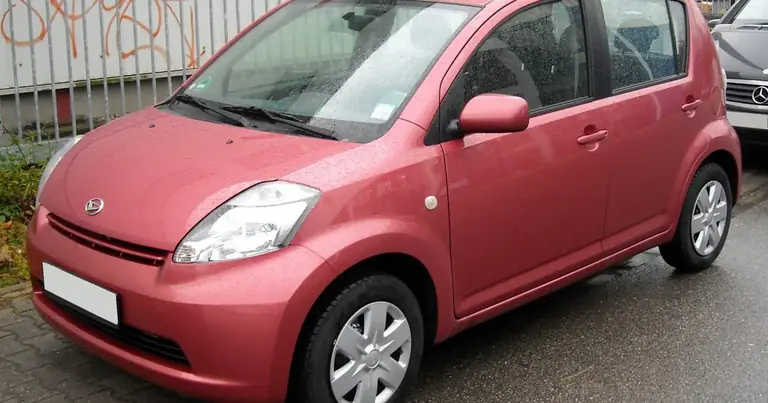
Daihatsu Sirion (M2) (2005-2015)

Arriving in 2005, the second-generation Sirion M2 adopted a much squarer, more rational body profile, maximising cabin room and passenger visibility while retaining a compact footprint. Benefiting from Toyota co-development, regular Daihatsu Sirion maintenance ensures this dependable supermini remains exceptionally cheap to run, provided that routine intake servicing and drivetrain fluid changes are not overlooked.

Under the bonnet, drivers choose between the frugal 1.0-litre three-cylinder 1KR-FE and the more muscular 1.3-litre four-cylinder K3-VE, both featuring maintenance-free timing chains. In heavy city use, carbon accumulation around the electronic throttle body and idle air control valve frequently produces hunting engine speeds and cold-start stalling. Furthermore, models fitted with the optional automatic gearbox require regular fluid renewal to avoid shift hesitation and converter shudder.

Suivi free

Entrez votre number plate d’number plate afin de suivre freeement votre Sirion (M2)

Garajo prépare votre garage et vous permet ensuite de suivre les maintenances, les rappels et les points à surveiller.

UKGB

Owner notes

The reassuring points, known weak spots and deadlines you should not let slip.

Reassuring points

Reliability
  • Highly dependable Toyota-engineered petrol engines delivering excellent longevity in dense city environments.
  • Surprisingly spacious cabin with sliding and folding rear seats creating impressive cargo volume.
  • Maintenance-free timing chains on both 1.0 and 1.3 engines eliminating costly cambelt renewals.
  • Intuitive, straightforward mechanical design with modest parts pricing and low workshop labour times.

Chronic weak spots

Keep an eye on
  • Electronic throttle body and IAC valve carbon fouling: causes unstable cold idle and engine stalling under electrical load.
  • 1.3-litre K3-VE ignition pencil coils: breakdown under partial load between 2,000 and 3,000 rpm, causing hesitation.
  • 4WD driveline binding: unmatched tyre rolling circumferences overload the centre coupling, stressing driveshaft gaiters.
  • Clutch cable and pedal mechanism: heavy pedal feel or clutch shudder indicates a frayed release cable or worn release bearing.
  • Front suspension lower wishbones: knocking noises over speed bumps signal split rubber bushes and worn ball joints.

Critical deadlines

Do not miss
  • Engine oil and filter renewal every 15,000 km or 12 months (reduced to 10,000 km in congested stop-start driving).
  • Automatic transmission fluid renewal every 40,000 km or 36 months to maintain smooth shifts and prevent clutch judder.
  • Spark plug and air filter replacement every 30,000 km to ensure clean combustion and steady idling.
  • Front suspension bush inspection and wheel alignment check every 30,000 km.

Fréquences d'maintenance recommandées

Service markers for petrol/diesel versions. Exact intervals vary by engine and model year.

Oil change

Every 15 000 km

Every 1 year

Service

Every 15 000 km

Every 1 year

Brake pads

Every 50 000 km

Every 2 years

Vehicle léger et modeste : usure des number platettes généralement modérée

Timing belt / chain

Timing chain - designed to last, no scheduled replacement

Battery (12 V)

Every 50 000 km

Every 4 years

Powertrains and average consumption

Average consumption from manufacturer data for the versions available in this generation.

Petrol and diesel powertrains

Petrol, diesel or LPG versions. The intervals shown cover the usual mechanical jobs.

Estimated average budget

Standard cost

Servicing a Daihatsu Sirion (M2) sits in line with the market average.

Simple oil change~85
Full service~255
Front brake pads~115
Timing-belt kit~650
Tyres (set of 4)~400

Price shown for belt-driven engines; some versions use a chain (no due date).

* Indicative estimates for parts and labour.

Frequently asked questions about Daihatsu Sirion (M2)

What are the common problems on the Sirion (M2)?
Sirion (M2) owners should especially watch: Electronic throttle body and IAC valve carbon fouling: causes unstable cold idle and engine stalling under electrical load. 1.3-litre K3-VE ignition pencil coils: breakdown under partial load between 2,000 and 3,000 rpm, causing hesitation. Garajo includes these watch points so you can act early.
Does the Sirion (M2) timing chain need to be replaced?
The Sirion (M2) engine uses a timing chain designed to last the life of the engine, with no scheduled replacement. Listening for noise during a service is enough.
Where can I find the service book for the Daihatsu Sirion (M2)?
Garajo offers a free digital service book, always up to date, with reminders and a detailed history for your Daihatsu Sirion (M2).
How much does it cost to service a Daihatsu Sirion (M2)?
The service budget for a Daihatsu Sirion (M2) sits in line with the market average. Allow about 255 € for a full service, for example. Garajo estimates your budget by powertrain and tracks what you actually spend, for free.
Which Daihatsu Sirion (M2) powertrain is best for town use?
This model is only available as petrol/diesel. Fuel mix: 5 petrol versions. In town, prefer the most economical, well-serviced petrol/diesel version.
Which Daihatsu Sirion (M2) powertrain should you choose if you mostly drive on the motorway?
This model is only available as petrol/diesel. Fuel mix: 5 petrol versions. On the motorway, prefer petrol/diesel versions with the best power-to-consumption compromise.

Compatible engine oil

Which engine oil for Daihatsu Sirion (M2)?

These links are limited to the engines of this generation when oil data is available.

Unsure between two viscosities?5W-30 vs 5W-400W-20 vs 5W-305W-30 vs 0W-30

Ne ratez plus jamais un maintenance

Gérez l'maintenance de votre Daihatsu Sirion (M2) freeement.
Centralise your history and spending in a few clicks.Téléchargez le service book de votre Daihatsu Sirion (M2) en PDF à tout moment.

Créer mon carnet (Free)