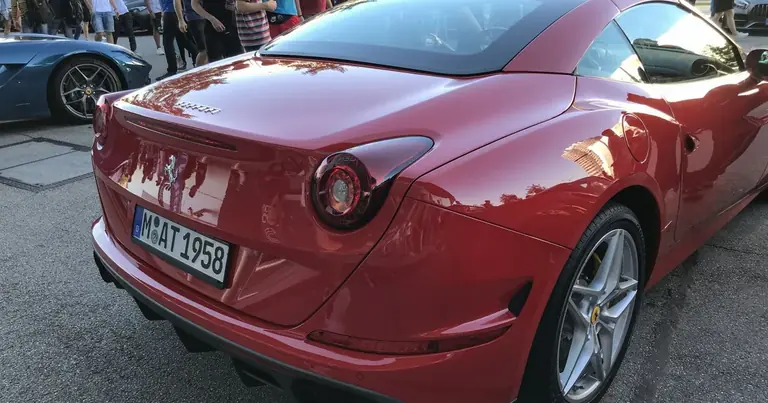
The California T marked the return of forced induction to Maranello, replacing the atmospheric unit with a sophisticated 3.9-litre twin-turbocharged V8 boasting 560 hp and zero discernible turbo lag. Compared with a soft-top Aston Martin V8 Vantage Roadster, the Ferrari offers superior modern cabin packaging, greater mid-range punch and a robust folding metal roof. Exploring Ferrari California maintenance highlights that the transition to turbocharging requires increased vigilance regarding under-bonnet thermal dissipation and cooling circuit integrity.
While the forced-induction F154 BB engine delivers massive low-end pulling power via Variable Boost Management, turbo heat places higher stress on cooling hoses, gaskets and engine bay ancillaries. On cars primarily used for relaxed boulevard cruising, low mileage can mask weak 12-volt battery health, roof hydraulic seal fatigue and occasional DCT software hesitation. The folding hardtop mechanism and direct-injection fuel system must be verified alongside cooling performance.