Plan d’maintenance Ferrari F50 GT
Logo Ferrari

Online service book

Generations :F50F50 GTAll →
Logo Ferrari

📖F50 GT: legendary 750 hp GT1 prototype racer requiring forensic historical provenance and structural care

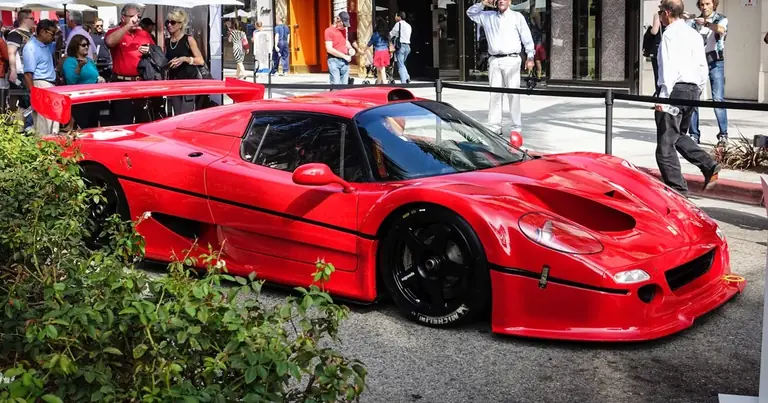
Ferrari F50 GT (1996)

Engineered in 1996 by Ferrari in collaboration with Dallara to contest the BPR Global GT Series against the McLaren F1 GTR, the F50 GT was cancelled before its racing debut, resulting in just three completed chassis worldwide. It is neither a road car nor a conventional track day toy; it is an ultra-rare, works-level racing prototype powered by an extreme naturally aspirated 4.7 V12 producing 750 hp at a staggering 10,500 rpm. Reviewing Ferrari F50 maintenance in the stratosphere of prototype motorsport confirms that acquisition hinges upon forensic chassis verification, factory documentation and master-level competition engineering.

Suivi free

Entrez votre number plate d’number plate afin de suivre freeement votre F50 GT

Garajo prépare votre garage et vous permet ensuite de suivre les maintenances, les rappels et les points à surveiller.

UKGB

Owner notes

The reassuring points, known weak spots and deadlines you should not let slip.

Reassuring points

Reliability
  • One of the rarest, most mythical Ferrari racing machines ever constructed, with only three examples completed globally.
  • Screaming 750 hp naturally aspirated V12 capable of spinning to 10,500 rpm with an unforgettable Formula 1 acoustic intensity.
  • Bespoke Dallara racing development featuring radical downforce, extreme carbon-fibre weight loss and lightning sequential shifting.
  • Ultimate blue-chip status commanding peerless fascination among the world's most elite supercar connoisseurs.

Chronic weak spots

Keep an eye on
  • Chassis identity and provenance: verify Dallara and Ferrari chassis stamping numbers against official Maranello factory build sheets.
  • Carbon composite chassis tub: perform comprehensive ultrasound or non-destructive testing on carbon monocoque and wing mountings for delamination.
  • Race-spec V12 engine recommissioning: inspect cooling circuits, oil scavenge lines and verify dyno health before running the engine under load.
  • Sequential dog-ring gearbox: inspect gear cluster, dog rings, drop gears and clutch pack for micro-cracks or excessive tooth pitting.

Critical deadlines

Do not miss
  • Total fluid and filter renewal including race-specification engine oil, gearbox oil and coolant prior to any engine firing sequence.
  • Non-destructive testing (NDT) and crack testing of suspension uprights, centre-lock spindles and steering arms every season.
  • Inspection and replacement of safety components including fuel bladder cell, fire suppression bottle and harnesses.
  • Complete engine overhaul and valve train inspection every 30 to 40 operating hours by an accredited Ferrari Classiche race specialist.

Fréquences d'maintenance recommandées

Service markers for petrol/diesel versions. Exact intervals vary by engine and model year.

Oil change

Every 15 000 km

Every 1 year

Service

Every 15 000 km

Every 1 year

Brake pads

Every 30 000 km

Every 2 years

Poids ou puissance élevés : usure des number platettes accélérée sur certaines versions

Timing belt / chain

Every 100 000 km

Every 5 years

Battery (12 V)

Every 50 000 km

Every 4 years

Powertrains and average consumption

Average consumption from manufacturer data for the versions available in this generation.

Petrol and diesel powertrains

Petrol, diesel or LPG versions. The intervals shown cover the usual mechanical jobs.

Estimated average budget

Standard cost

Servicing a Ferrari F50 GT sits in line with the market average.

Simple oil change~100
Full service~275
Front brake pads~130
Timing-belt kit~650
Tyres (set of 4)~400

* Indicative estimates for parts and labour.

Frequently asked questions about Ferrari F50 GT

What are the common problems on the F50 GT?
F50 GT owners should especially watch: Chassis identity and provenance: verify Dallara and Ferrari chassis stamping numbers against official Maranello factory build sheets. Carbon composite chassis tub: perform comprehensive ultrasound or non-destructive testing on carbon monocoque and wing mountings for delamination. Garajo includes these watch points so you can act early.
When should you change the timing belt on a F50 GT?
The timing belt is usually replaced every 100,000 km or 5 years on this type of engine.
Where can I find the service book for the Ferrari F50 GT?
Garajo offers a free digital service book, always up to date, with reminders and a detailed history for your Ferrari F50 GT.
How much does it cost to service a Ferrari F50 GT?
The service budget for a Ferrari F50 GT sits in line with the market average. Allow about 275 € for a full service, for example. Garajo estimates your budget by powertrain and tracks what you actually spend, for free.
Which Ferrari F50 GT powertrain is best for town use?
This model is only available as petrol/diesel. Fuel mix: 1 petrol version. In town, prefer the most economical, well-serviced petrol/diesel version.
Which Ferrari F50 GT powertrain should you choose if you mostly drive on the motorway?
This model is only available as petrol/diesel. Fuel mix: 1 petrol version. On the motorway, prefer petrol/diesel versions with the best power-to-consumption compromise.

Compatible engine oil

Which engine oil for Ferrari F50 GT?

These links are limited to the engines of this generation when oil data is available.

Unsure between two viscosities?5W-30 vs 5W-405W-40 vs 10W-405W-40 vs 0W-40

Ne ratez plus jamais un maintenance

Gérez l'maintenance de votre Ferrari F50 GT freeement.
Centralise your history and spending in a few clicks.Téléchargez le service book de votre Ferrari F50 GT en PDF à tout moment.

Créer mon carnet (Free)