Plan d’maintenance Fiat Bravo I
Logo Fiat

Online service book

Generations :Bravo 1Bravo 2All →
Logo Fiat

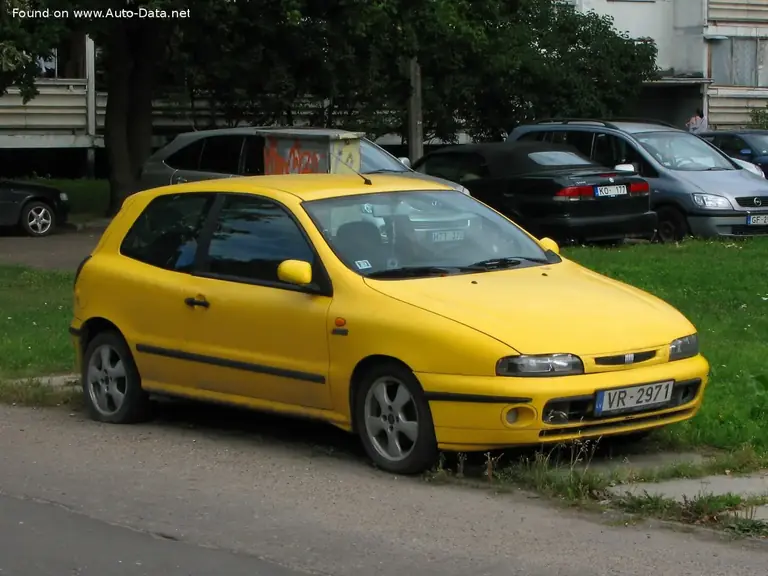
📖Fiat Bravo I: preserving the expressive 1990s Italian hatchback classic

Fiat Bravo I (1995-2002)

Launched in 1995 as the three-door sibling to the family-oriented five-door Brava, the Fiat Bravo (Type 182) brought radical aerodynamic styling and spirited Italian engines to the European C-segment. Competing head-to-head with the Opel Astra and Peugeot 306, it gained a devoted following for its dynamic chassis and expressive design, demonstrating that dedicated Fiat Bravo maintenance is now the dividing line between an enjoyable emerging modern classic and a neglected project car.

Suivi free

Entrez votre number plate d’number plate afin de suivre freeement votre Bravo I

Garajo prépare votre garage et vous permet ensuite de suivre les maintenances, les rappels et les points à surveiller.

UKGB

Owner notes

The reassuring points, known weak spots and deadlines you should not let slip.

Reassuring points

Reliability
  • The 1.6 16v petrol engine delivers eager revving performance, predictable reliability and modest routine running costs.
  • The 2.0 20v five-cylinder HGT provides an exhilarating exhaust note and genuine modern classic collector appeal.
  • The 1.9 JTD common-rail diesel is capable of intergalactic mileages when maintained with regular oil changes.
  • Distinctive 1990s styling with wraparound rear lights and clean proportions makes well-preserved examples turn heads.

Chronic weak spots

Keep an eye on
  • Timing belt and tensioner pulleys: verify verified replacement within the past 5 years or 60,000 km, especially on 1.6 16v and 2.0 20v engines.
  • Rear trailing arm bearings: check for rear wheel camber tilt, rear-end wandering over bumps and uneven tyre tread wear.
  • Underbody corrosion: thoroughly examine sills, floor pans, front suspension crossmembers and fuel tank straps for rust.
  • Engine cooling circuit: inspect radiator core, thermostat and hoses for weeping; the 1.4 12v is particularly sensitive to thermal stress.
  • Heater matrix: check front footwell carpets for dampness and coolant smell indicating a leaking heater core.

Critical deadlines

Do not miss
  • Engine oil and filter change every 10,000 km or 12 months using quality synthetic lubricant.
  • Timing belt, tensioner and water pump renewal every 60,000 km or 5 years (critical preventative milestone).
  • Coolant flush and brake fluid renewal every 24 months or 40,000 km.
  • Rear suspension trailing arm bearing inspection and underbody rust protection check every 24 months.

Fréquences d'maintenance recommandées

Service markers for petrol/diesel versions. Exact intervals vary by engine and model year.

Oil change

Every 15 000 km

Every 1 year

Service

Every 15 000 km

Every 1 year

Brake pads

Every 40 000 to 50 000 km

Every 2 years

Vehicle léger et modeste : usure des number platettes généralement modérée

Timing belt / chain

Every 100 000 km

Every 5 years

Battery (12 V)

Every 50 000 km

Every 4 years

Powertrains and average consumption

Average consumption from manufacturer data for the versions available in this generation.

Petrol and diesel powertrains

Petrol, diesel or LPG versions. The intervals shown cover the usual mechanical jobs.

Estimated average budget

Economical cost

Servicing a Fiat Bravo I sits about 12% cheaper than the market average.

Simple oil change~75
Full service~205
Front brake pads~95
Timing-belt kit~500
Tyres (set of 4)~400

* Indicative estimates for parts and labour.

Frequently asked questions about Fiat Bravo I

What are the common problems on the Bravo I?
Bravo I owners should especially watch: Timing belt and tensioner pulleys: verify verified replacement within the past 5 years or 60,000 km, especially on 1.6 16v and 2.0 20v engines. Rear trailing arm bearings: check for rear wheel camber tilt, rear-end wandering over bumps and uneven tyre tread wear. Garajo includes these watch points so you can act early.
When should you change the timing belt on a Bravo I?
The timing belt is usually replaced every 100,000 km or 5 years on this type of engine.
Where can I find the service book for the Fiat Bravo I?
Garajo offers a free digital service book, always up to date, with reminders and a detailed history for your Fiat Bravo I.
How much does it cost to service a Fiat Bravo I?
The service budget for a Fiat Bravo I sits about 12% cheaper than the market average. Allow about 205 € for a full service, for example. Garajo estimates your budget by powertrain and tracks what you actually spend, for free.
Which Fiat Bravo I powertrain is best for town use?
This model is only available as petrol/diesel. Fuel mix: 9 petrol versions ; 4 diesel versions. In town, petrol/LPG versions are usually the better match; diesel versions make more sense with regular long journeys.
Which Fiat Bravo I powertrain should you choose if you mostly drive on the motorway?
This model is only available as petrol/diesel. Fuel mix: 9 petrol versions ; 4 diesel versions. For regular motorway use, diesel versions of this model are usually the best fit (range and refinement at a steady speed).

Compatible engine oil

Which engine oil for Fiat Bravo I?

These links are limited to the engines of this generation when oil data is available.

Unsure between two viscosities?5W-40 vs 10W-405W-30 vs 5W-400W-20 vs 5W-30

Ne ratez plus jamais un maintenance

Gérez l'maintenance de votre Fiat Bravo I freeement.
Centralise your history and spending in a few clicks.Téléchargez le service book de votre Fiat Bravo I en PDF à tout moment.

Créer mon carnet (Free)