Plan d’maintenance Chevrolet Bolt EV I
Logo Chevrolet

Online service book

Logo Chevrolet

📖Chevrolet Bolt EV I: pioneer of affordable long-range electric motoring

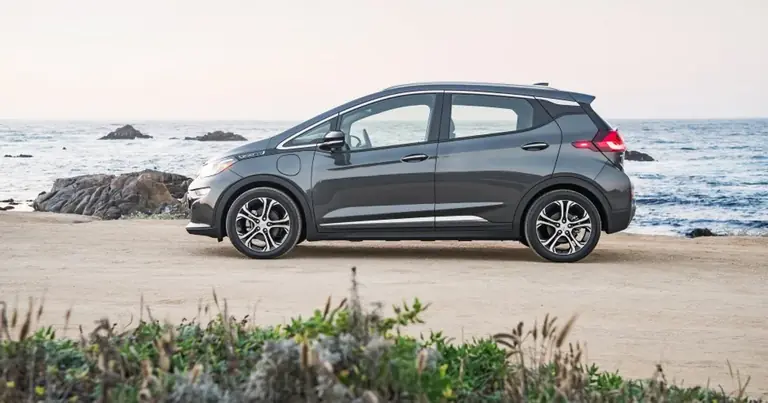
Chevrolet Bolt EV I (2016-2021)

The original Chevrolet Bolt EV made automotive history by delivering an EPA-rated range exceeding 380 km in a compact, affordable hatchback package years ahead of mainstream rivals. Featuring a tall monospace design, an airy cabin, and punchy 200 hp instant electric drive, it redefined practical zero-emissions commuting. Strict adherence to Chevrolet Bolt EV maintenance is paramount to ensure its high-voltage and auxiliary systems remain safe and efficient.

The centerpiece of the vehicle is its liquid-cooled traction battery (originally 60 kWh, later 66 kWh). Prospective buyers must verify that the high-profile battery recall was completed with a documented full pack or module replacement and the latest battery management software installed. The front electric drive motor feeds a single-speed reduction gearbox, while an advanced thermal management system actively cools or heats the battery pack via dedicated coolant circuits.

Suivi free

Entrez votre number plate d’number plate afin de suivre freeement votre Bolt EV I

Garajo prépare votre garage et vous permet ensuite de suivre les maintenances, les rappels et les points à surveiller.

UKGB

Owner notes

The reassuring points, known weak spots and deadlines you should not let slip.

Reassuring points

Reliability
  • Impressive real-world driving range from a compact, easily parkable hatchback with brisk electric acceleration.
  • Low routine maintenance requirements with no oil changes, exhaust systems, or multi-speed gearboxes to service.
  • Many examples benefit from brand-new, factory-replaced battery packs and fresh warranty coverage following the recall.

Chronic weak spots

Keep an eye on
  • High-voltage traction battery: verify documented proof of the safety recall battery replacement and check cell balance via diagnostic scan.
  • Front drive unit reducer: listen for abnormal whining or clicking under heavy regenerative braking and acceleration.
  • AC and DC rapid charging: check charge port latching, on-board charger functionality, and verify fast DC charging speeds.
  • 12 V auxiliary battery: check battery voltage and terminal connections, as a failing 12 V unit triggers multiple electronic warnings.
  • Brakes and tyres: inspect rear brake discs for corrosion from low usage, and check front tyres for rapid wear from instant electric torque.

Critical deadlines

Do not miss
  • Verify complete battery recall documentation and software updates with an authorised Chevrolet EV service centre before purchase.
  • Test and replace the auxiliary 12 V battery every 3 to 4 years to prevent vehicle boot-up and charging faults.
  • Service the high-voltage battery coolant loops and reduction gearbox lubricant according to manufacturer guidelines.

Fréquences d'maintenance recommandées

Service markers for electric versions. Petrol/diesel engine jobs do not apply.

Service

Every 15 000 km

Every 1 year

Check the electrical system

Every 15 000 km

Every 1 year

Traction battery diagnosis

Every 15 000 km

Every 1 year

Battery coolant

Every 120 000 km

Every 10 years

Brake pads

Every 60 000 km

Every 2 years

Freinage régénératif : number platettes préservées, mais faites contrôler la corrosion des disques

Battery (12 V)

Every 50 000 km

Every 4 years

Powertrains and average consumption

Average consumption from manufacturer data for the versions available in this generation.

Electric powertrains

Fully electric versions. Servicing focuses on the high-voltage system, charging and battery monitoring.

Budget maintenance electric

Sur votre Chevrolet Bolt EV I electric, les coûts se concentrent surtout sur les contrôles périodiques, les tyres, les freins et le suivi batterie.

Frequently asked questions about Chevrolet Bolt EV I

What servicing does an electric Chevrolet Bolt EV I need?
On a fully electric Chevrolet Bolt EV I, periodic servicing is mainly a general inspection, an electrical-system check and a traction-battery diagnosis, plus brakes, tyres and the MOT. Garajo groups these checks and reminds you of each due date, for free.
How often should you check the electrical system and the battery?
The usual benchmark is every 15,000 km or 1 year, with a traction-battery diagnosis on the same rhythm (15,000 km / 1 year).
When should you change the battery coolant on a Bolt EV I?
Garajo shows 120,000 km or 10 years. The interval can vary by manufacturer: always confirm in the handbook.
Does an electric Bolt EV I need an oil change or a timing belt?
No. Those jobs apply to petrol and diesel engines. On a fully electric version, maintenance focuses on the electrical system, braking, tyres and safety checks.
How much does it cost to service a Chevrolet Bolt EV I?
The service budget for a Chevrolet Bolt EV I sits slightly above the market average (+20%). Allow about 150 € for a full service, for example. Garajo estimates your budget by powertrain and tracks what you actually spend, for free.
Which Chevrolet Bolt EV I powertrain is best for town use?
This model is only available as electric. In town, electric versions fit best thanks to energy recuperation and the absence of cold-start cycles.
Which Chevrolet Bolt EV I powertrain should you choose if you mostly drive on the motorway?
This model is only available as electric. On the motorway in an electric version, look for the longest range and strong DC rapid charging.

Ne ratez plus jamais un maintenance

Gérez l'maintenance de votre Chevrolet Bolt EV I freeement.
Centralise your history and spending in a few clicks.Téléchargez le service book de votre Chevrolet Bolt EV I en PDF à tout moment.

Créer mon carnet (Free)