Plan d’maintenance Chevrolet Bolt EV II
Logo Chevrolet

Online service book

Logo Chevrolet

📖Chevrolet Bolt EV II: the next-generation Ultium-powered compact electric car

Chevrolet Bolt EV II (2026-Présent)

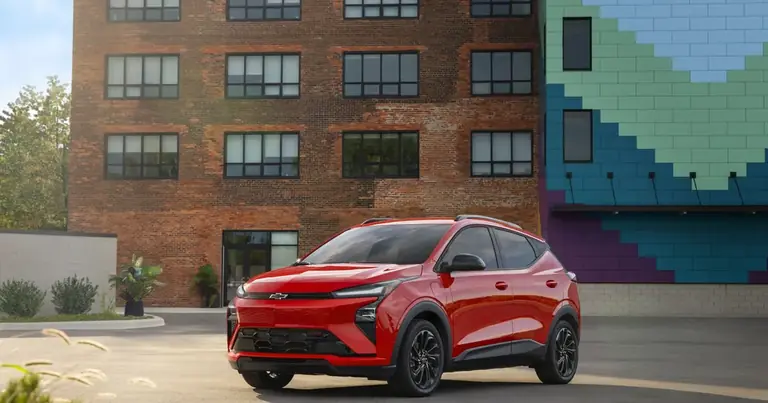
Returning for the 2027 model year with initial customer deliveries starting in 2026, the second-generation Bolt EV resurrects GM's beloved electric nameplate on an upgraded architecture. Designed to offer accessible pricing without sacrificing contemporary charging speeds or digital technology, it pairs modern styling with everyday practicality. Staying on top of Chevrolet Bolt EV maintenance is essential to protect its advanced battery chemistry and software systems.

The new Bolt EV adopts an integrated NACS charging port, 150 kW+ DC fast-charging capability, and GM's advanced Ultium battery pack technology, dramatically improving cross-country usability over the original car. Power is delivered by a new X76 electric drive motor driving the front wheels through an efficient single-speed reduction unit. An upgraded thermal management loop with proactive preconditioning optimises rapid charging, while a revised blended regenerative braking system enhances brake pedal feel.

Suivi free

Entrez votre number plate d’number plate afin de suivre freeement votre Bolt EV II

Garajo prépare votre garage et vous permet ensuite de suivre les maintenances, les rappels et les points à surveiller.

UKGB

Owner notes

The reassuring points, known weak spots and deadlines you should not let slip.

Reassuring points

Reliability
  • Ultium-based battery technology and native NACS port provide modern 150 kW+ DC rapid charging speeds.
  • Significantly upgraded cabin with large dual displays, Google built-in connectivity, and over 20 standard safety assists.
  • Refined X76 electric motor and blended braking deliver superior driving dynamics and energy efficiency.

Chronic weak spots

Keep an eye on
  • NACS DC rapid charging: verify fast-charging handshake, session stability, and confirm automatic battery preconditioning activates before DC stops.
  • Infotainment and software: monitor dual screens for system freezes, connectivity drops, and ensure over-the-air firmware updates complete.
  • Blended regenerative braking: check the smooth handover between regenerative deceleration and mechanical friction braking.
  • 12 V auxiliary power: verify low-voltage battery state of charge and check for clean module boot-up after prolonged standing.
  • Single-speed drive unit: listen for unusual motor bearing whine or driveline vibration under hard acceleration.

Critical deadlines

Do not miss
  • Apply all factory over-the-air software updates, technical service bulletins, and battery calibrations promptly.
  • Monitor DC rapid charge rates, battery preconditioning, and 12 V battery health during the early ownership period.
  • Inspect friction brake calipers, suspension bushes, and reduction gearbox fluid condition at scheduled service intervals.

Fréquences d'maintenance recommandées

Service markers for electric versions. Petrol/diesel engine jobs do not apply.

Service

Every 15 000 km

Every 1 year

Check the electrical system

Every 15 000 km

Every 1 year

Traction battery diagnosis

Every 15 000 km

Every 1 year

Battery coolant

Every 120 000 km

Every 10 years

Brake pads

Every 60 000 km

Every 2 years

Freinage régénératif : number platettes préservées, mais faites contrôler la corrosion des disques

Battery (12 V)

Every 50 000 km

Every 4 years

Powertrains and average consumption

Average consumption from manufacturer data for the versions available in this generation.

Electric powertrains

Fully electric versions. Servicing focuses on the high-voltage system, charging and battery monitoring.

Budget maintenance electric

Sur votre Chevrolet Bolt EV II electric, les coûts se concentrent surtout sur les contrôles périodiques, les tyres, les freins et le suivi batterie.

Frequently asked questions about Chevrolet Bolt EV II

What servicing does an electric Chevrolet Bolt EV II need?
On a fully electric Chevrolet Bolt EV II, periodic servicing is mainly a general inspection, an electrical-system check and a traction-battery diagnosis, plus brakes, tyres and the MOT. Garajo groups these checks and reminds you of each due date, for free.
How often should you check the electrical system and the battery?
The usual benchmark is every 15,000 km or 1 year, with a traction-battery diagnosis on the same rhythm (15,000 km / 1 year).
When should you change the battery coolant on a Bolt EV II?
Garajo shows 120,000 km or 10 years. The interval can vary by manufacturer: always confirm in the handbook.
Does an electric Bolt EV II need an oil change or a timing belt?
No. Those jobs apply to petrol and diesel engines. On a fully electric version, maintenance focuses on the electrical system, braking, tyres and safety checks.
How much does it cost to service a Chevrolet Bolt EV II?
The service budget for a Chevrolet Bolt EV II sits in line with the market average. Allow about 130 € for a full service, for example. Garajo estimates your budget by powertrain and tracks what you actually spend, for free.
Which Chevrolet Bolt EV II powertrain is best for town use?
This model is only available as electric. In town, electric versions fit best thanks to energy recuperation and the absence of cold-start cycles.
Which Chevrolet Bolt EV II powertrain should you choose if you mostly drive on the motorway?
This model is only available as electric. On the motorway in an electric version, look for the longest range and strong DC rapid charging.

Ne ratez plus jamais un maintenance

Gérez l'maintenance de votre Chevrolet Bolt EV II freeement.
Centralise your history and spending in a few clicks.Téléchargez le service book de votre Chevrolet Bolt EV II en PDF à tout moment.

Créer mon carnet (Free)