Plan d’maintenance Dacia Duster Phase 2
Logo Dacia

Online service book

Generations :Duster Phase 1Duster Phase 2Duster Phase 3All →
Logo Dacia

📖Dacia Duster II: modernised refinement and sophisticated powertrain choices

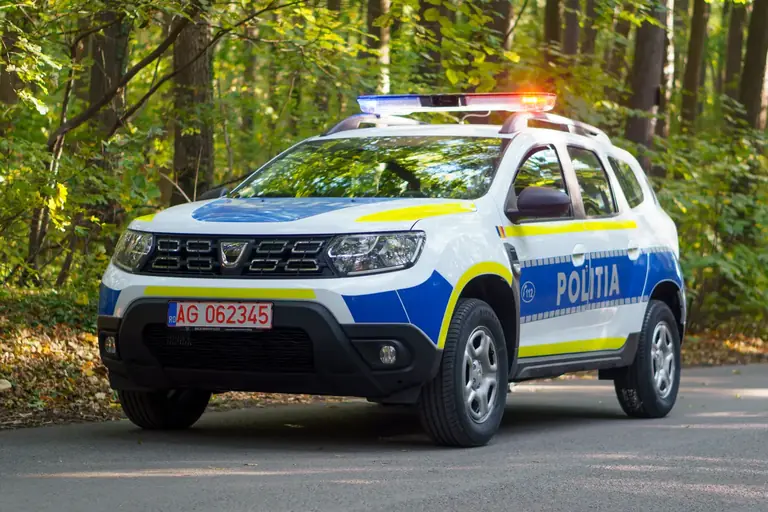
Dacia Duster Phase 2 (2018-2024)

The second-generation Dacia Duster introduced in 2018 elevated the vehicle's acoustic refinement, cabin ergonomics and active safety features while maintaining its core rugged character. Popular among families, commuters and outdoor enthusiasts, sensible Dacia Duster maintenance preserves the value and mechanical reliability of this modern crossover, where engine choice significantly dictates servicing protocols.

The powertrain catalogue evolved substantially throughout this phase. Early models featured the 1.6 SCe and 1.2 TCe, rapidly replaced by the stellar 1.3 TCe petrol engine (130 and 150 hp) featuring a gasoline particulate filter. High-mileage drivers benefited from the 1.5 Blue dCi engine with SCR AdBlue injection. The 1.3 TCe provides punchy, quiet motorway cruising, requiring high-specification RN17 synthetic oil. The Blue dCi demands regular long-distance drives to prevent AdBlue injector crystal deposits and DPF saturation.

Suivi free

Entrez votre number plate d’number plate afin de suivre freeement votre Duster Phase 2

Garajo prépare votre garage et vous permet ensuite de suivre les maintenances, les rappels et les points à surveiller.

UKGB

Owner notes

The reassuring points, known weak spots and deadlines you should not let slip.

Reassuring points

Reliability
  • Vastly superior sound insulation, ride comfort and steering precision compared to the first-generation Duster.
  • The 1.3 TCe engine delivers outstanding torque, low fuel consumption and proven mechanical durability.
  • Capable four-wheel-drive system with selectable 2WD, Auto and 4WD Lock modes for demanding terrain.
  • Low overall running costs with high residual values and readily available replacement parts across Europe.

Chronic weak spots

Keep an eye on
  • 1.3 TCe GPF (H5H): adhere to RN17 engine oil specification and check timing chain tensioner and oil level periodically.
  • 1.5 Blue dCi: monitor AdBlue warning lights, inspect SCR dosing injector and ensure DPF regeneration completeness.
  • EDC transmission: check for clutch judder, delayed gear engagement or jerky shifts when moving away from a standstill.
  • 4x4 running gear: inspect rear differential oil seals, propshaft universal joints and rear multi-link suspension bushes.
  • 1.2 TCe (H5Ft on early 2018 models): check engine oil level frequently and listen for timing chain rattle on cold startup.

Critical deadlines

Do not miss
  • Engine oil and filter change every 15,000 km or 12 months using strictly Renault RN17 (petrol) or RN17 FE (diesel) spec.
  • Cambelt kit and water pump replacement every 150,000 km or 72 months on 1.5 Blue dCi diesel models.
  • Rear differential and transfer box oil renewal every 60,000 km or 48 months on 4x4 versions.
  • Brake fluid replacement and chassis joint torque check every 24 months or 40,000 km.

Fréquences d'maintenance recommandées

Service markers for petrol/diesel versions. Exact intervals vary by engine and model year.

Oil change

Every 15 000 km

Every 1 year

Service

Every 15 000 km

Every 1 year

Brake pads

Every 40 000 to 50 000 km

Every 2 years

Vehicle léger et modeste : usure des number platettes généralement modérée

Timing belt / chain

Every 100 000 km

Every 5 years

Depending on powertrain: some versions use a timing chain (no scheduled replacement)

Battery (12 V)

Every 50 000 km

Every 4 years

Diesel particulate filter (DPF)

Every 100 000 km

Automatic regeneration while driving: regularly do 20 min on a fast road; preventive clean around 100,000 km

EGR valve

Every 80 000 km

Valve that soots up easily on diesels: a preventive clean avoids power loss and limp mode

Powertrains and average consumption

Average consumption from manufacturer data for the versions available in this generation.

Petrol and diesel powertrains

Estimated average budget

Economical cost

Servicing a Dacia Duster Phase 2 sits about 6% cheaper than the market average.

Simple oil change~85
Full service~215
Front brake pads~105
Timing-belt kit~500
Tyres (set of 4)~450

Price shown for belt-driven engines; some versions use a chain (no due date).

* Indicative estimates for parts and labour.

Frequently asked questions about Dacia Duster Phase 2

What are the common problems on the Duster Phase 2?
Duster Phase 2 owners should especially watch: 1.3 TCe GPF (H5H): adhere to RN17 engine oil specification and check timing chain tensioner and oil level periodically. 1.5 Blue dCi: monitor AdBlue warning lights, inspect SCR dosing injector and ensure DPF regeneration completeness. Garajo includes these watch points so you can act early.
When should you change the timing belt on a Duster Phase 2?
Depending on the engine, the Duster Phase 2 is fitted with a timing chain (maintenance-free, except if it is noisy) or a timing belt (replace about every 100,000 km or 5 years). Check the engine code to see which applies.
Where can I find the service book for the Dacia Duster Phase 2?
Garajo offers a free digital service book, always up to date, with reminders and a detailed history for your Dacia Duster Phase 2.
How much does it cost to service a Dacia Duster Phase 2?
The service budget for a Dacia Duster Phase 2 sits about 6% cheaper than the market average. Allow about 215 € for a full service, for example. Garajo estimates your budget by powertrain and tracks what you actually spend, for free.
Which Dacia Duster Phase 2 powertrain is best for town use?
This model is only available as petrol/diesel. Fuel mix: 14 petrol versions ; 14 diesel versions ; 4 LPG versions. In town, petrol/LPG versions are usually the better match; diesel versions make more sense with regular long journeys.
Which Dacia Duster Phase 2 powertrain should you choose if you mostly drive on the motorway?
This model is only available as petrol/diesel. Fuel mix: 14 petrol versions ; 14 diesel versions ; 4 LPG versions. For regular motorway use, diesel versions of this model are usually the best fit (range and refinement at a steady speed).

Compatible engine oil

Which engine oil for Dacia Duster Phase 2?

These links are limited to the engines of this generation when oil data is available.

Unsure between two viscosities?5W-30 vs 5W-400W-20 vs 5W-305W-30 vs 0W-30

Ne ratez plus jamais un maintenance

Gérez l'maintenance de votre Dacia Duster Phase 2 freeement.
Centralise your history and spending in a few clicks.Téléchargez le service book de votre Dacia Duster Phase 2 en PDF à tout moment.

Créer mon carnet (Free)