Plan d’maintenance Daihatsu Move Latte (L55)
Logo Daihatsu

Online service book

Generations :Move (L9)Move Latte (L55)All →
Logo Daihatsu

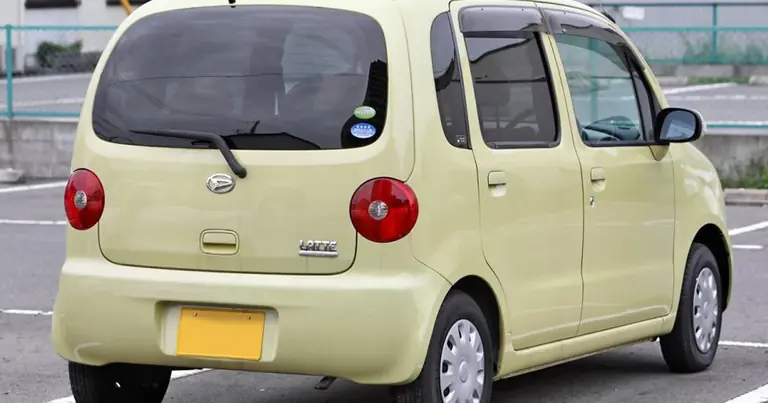
📖Daihatsu Move Latte (L55): the 2003-2009 neo-retro kei car

Daihatsu Move Latte (L55) (2003-2009)

The Move Latte brings a delightfully soft neo-retro aesthetic to the practical Move platform, featuring rounded lamps, pastel colour palettes and a plush, comfort-focused cabin. Maintaining this stylish Japanese kei-car requires targeted Daihatsu Move maintenance, paying close attention to miniature engine clearances, high-tech ignition coils and urban suspension wear.

Under the bonnet lies a 659 cc three-cylinder engine, offered in naturally aspirated (EF-VE) or turbocharged (EF-DET) RS guises, paired with a column-shift automatic gearbox. Both variants rely on a rubber cambelt that must be replaced on time. On the 16V RS turbo, failing pencil ignition coils frequently cause a noticeable flat spot or stutter between 2,500 and 3,500 rpm under acceleration before triggering an engine management warning light.

Suivi free

Entrez votre number plate d’number plate afin de suivre freeement votre Move Latte (L55)

Garajo prépare votre garage et vous permet ensuite de suivre les maintenances, les rappels et les points à surveiller.

UKGB

Owner notes

The reassuring points, known weak spots and deadlines you should not let slip.

Reassuring points

Reliability
  • Distinctive neo-retro rounded styling creating unique character and charm on modern roads.
  • Whisper-quiet, comfort-oriented cabin insulation and plush seating superior to standard kei cars.
  • Smooth four-speed column-shift automatic transmission making urban driving exceptionally relaxing.
  • Clever interior storage cubbies, flat-folding seats and high-quality Japanese build finish.

Chronic weak spots

Keep an eye on
  • Cambelt replacement on Move Latte: the 660 cc EF-series engine requires timely timing belt and tensioner renewal.
  • Pencil ignition coils on 16V RS: test for hesitations and misfires between 2,500 and 3,500 rpm under load.
  • Turbocharger lubrication on RS variants: frequent oil changes are crucial to prevent turbo bearing wear.
  • Front running gear wear: inspect inner tyre shoulders, lower wishbone bushes and front shock absorbers.
  • Electronic throttle body cleanliness: carbon deposits cause erratic idle and sudden stalling when stopping.

Critical deadlines

Do not miss
  • Engine oil and filter change every 5,000 km (turbo RS) or 10,000 km (naturally aspirated) or 12 months with synthetic oil.
  • Cambelt kit and water pump replacement every 100,000 km or 60 months to avoid engine damage.
  • Automatic gearbox fluid replacement every 40,000 km to safeguard internal hydraulic solenoids.
  • Cooling system flush and thermostat renewal every 40,000 km or 24 months to prevent overheating.

Fréquences d'maintenance recommandées

Service markers for petrol/diesel versions. Exact intervals vary by engine and model year.

Oil change

Every 15 000 km

Every 1 year

Service

Every 15 000 km

Every 1 year

Brake pads

Every 50 000 km

Every 2 years

Vehicle léger et modeste : usure des number platettes généralement modérée

Timing belt / chain

Every 100 000 km

Every 5 years

Battery (12 V)

Every 50 000 km

Every 4 years

Powertrains and average consumption

Average consumption from manufacturer data for the versions available in this generation.

Petrol and diesel powertrains

Petrol, diesel or LPG versions. The intervals shown cover the usual mechanical jobs.

Estimated average budget

Standard cost

Servicing a Daihatsu Move Latte (L55) sits in line with the market average.

Simple oil change~100
Full service~240
Front brake pads~110
Timing-belt kit~650
Tyres (set of 4)~400

* Indicative estimates for parts and labour.

Frequently asked questions about Daihatsu Move Latte (L55)

What are the common problems on the Move Latte (L55)?
Move Latte (L55) owners should especially watch: Cambelt replacement on Move Latte: the 660 cc EF-series engine requires timely timing belt and tensioner renewal. Pencil ignition coils on 16V RS: test for hesitations and misfires between 2,500 and 3,500 rpm under load. Garajo includes these watch points so you can act early.
When should you change the timing belt on a Move Latte (L55)?
The timing belt is usually replaced every 100,000 km or 5 years on this type of engine.
Where can I find the service book for the Daihatsu Move Latte (L55)?
Garajo offers a free digital service book, always up to date, with reminders and a detailed history for your Daihatsu Move Latte (L55).
How much does it cost to service a Daihatsu Move Latte (L55)?
The service budget for a Daihatsu Move Latte (L55) sits in line with the market average. Allow about 240 € for a full service, for example. Garajo estimates your budget by powertrain and tracks what you actually spend, for free.
Which Daihatsu Move Latte (L55) powertrain is best for town use?
This model is only available as petrol/diesel. Fuel mix: 2 petrol versions. In town, prefer the most economical, well-serviced petrol/diesel version.
Which Daihatsu Move Latte (L55) powertrain should you choose if you mostly drive on the motorway?
This model is only available as petrol/diesel. Fuel mix: 2 petrol versions. On the motorway, prefer petrol/diesel versions with the best power-to-consumption compromise.

Ne ratez plus jamais un maintenance

Gérez l'maintenance de votre Daihatsu Move Latte (L55) freeement.
Centralise your history and spending in a few clicks.Téléchargez le service book de votre Daihatsu Move Latte (L55) en PDF à tout moment.

Créer mon carnet (Free)