Plan d’maintenance Chevrolet Captiva I
Logo Chevrolet

Online service book

Logo Chevrolet

📖Chevrolet Captiva I: practical European-focused seven-seat family SUV

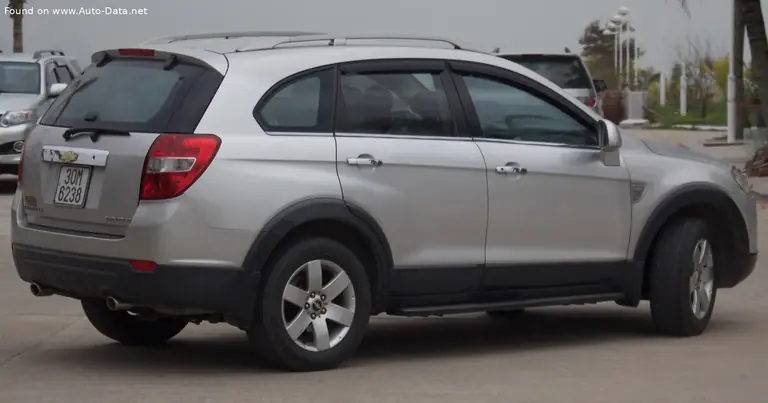
Chevrolet Captiva I (2006-2010)

Co-developed on GM's Theta platform alongside the Vauxhall/Opel Antara, the Captiva I marked Chevrolet's foray into the European mid-size SUV sector. Offering flexible five or seven-seat packaging, a elevated driving position, and honest pricing, it catered to practical family motoring. Similar in concept to a Kia Sorento, regular Chevrolet Captiva maintenance is vital to keep its chassis, driveline, and diesel ancillaries running smoothly.

The engine range centred on the popular VM Motori 2.0 VCDi diesel, alongside 2.4 four-cylinder and 3.2-litre V6 petrol options. The turbodiesel relies on a toothed cambelt requiring strict replacement intervals to avoid catastrophic internal damage. The optional on-demand AWD transfer case and five-speed automatic transmission require clean fluids to avoid premature wear under towing duties.

Suivi free

Entrez votre number plate d’number plate afin de suivre freeement votre Captiva I

Garajo prépare votre garage et vous permet ensuite de suivre les maintenances, les rappels et les points à surveiller.

UKGB

Owner notes

The reassuring points, known weak spots and deadlines you should not let slip.

Reassuring points

Reliability
  • Practical five or seven-seat cabin configuration with versatile folding rear seats and generous luggage capacity.
  • The 2.0 VCDi diesel offers strong mid-range towing torque when maintained with regular servicing.
  • Affordable purchase price and widely available spare parts shared across the GM Theta platform family.

Chronic weak spots

Keep an eye on
  • 2.0 VCDi diesel: check EGR valve cleanliness, inspect turbocharger boost hoses, and verify DPF regeneration history on later cars.
  • Timing belt: confirm documented replacement of the cambelt, tensioners, and water pump on 2.0 VCDi engines.
  • All-wheel-drive system: inspect rear differential, prop-shaft centre bearing, and ensure tyres are evenly worn across both axles.
  • Automatic gearbox: test gear changes between second and third gear from cold, checking for slipping under load.
  • Front suspension: check lower wishbones, anti-roll bar drop links, and wheel bearings worn by the vehicle's heavy kerb weight.

Critical deadlines

Do not miss
  • Replace the cambelt, tensioner pulleys, and water pump strictly within scheduled limits on 2.0 VCDi engines to prevent valve clash.
  • Service the automatic transmission fluid and rear differential lubricant early, particularly on cars used for towing caravans.
  • Inspect front suspension wishbones, bushes, and brake discs at every service to prevent uneven tyre wear and sloppy handling.

Fréquences d'maintenance recommandées

Service markers for petrol/diesel versions. Exact intervals vary by engine and model year.

Oil change

Every 15 000 km

Every 1 year

Service

Every 15 000 km

Every 1 year

Brake pads

Every 30 000 to 40 000 km

Every 2 years

Poids ou puissance élevés : usure des number platettes accélérée sur certaines versions

Timing belt / chain

Every 100 000 km

Every 5 years

Battery (12 V)

Every 50 000 km

Every 4 years

EGR valve

Every 80 000 km

Valve that soots up easily on diesels: a preventive clean avoids power loss and limp mode

Powertrains and average consumption

Average consumption from manufacturer data for the versions available in this generation.

Petrol and diesel powertrains

Estimated average budget

Mid-range cost

Servicing a Chevrolet Captiva I sits slightly above the market average (+19%).

Simple oil change~120
Full service~300
Front brake pads~160
Timing-belt kit~650
Tyres (set of 4)~495

* Indicative estimates for parts and labour.

Frequently asked questions about Chevrolet Captiva I

What are the common problems on the Captiva I?
Captiva I owners should especially watch: 2.0 VCDi diesel: check EGR valve cleanliness, inspect turbocharger boost hoses, and verify DPF regeneration history on later cars. Timing belt: confirm documented replacement of the cambelt, tensioners, and water pump on 2.0 VCDi engines. Garajo includes these watch points so you can act early.
When should you change the timing belt on a Captiva I?
The timing belt is usually replaced every 100,000 km or 5 years on this type of engine.
Where can I find the service book for the Chevrolet Captiva I?
Garajo offers a free digital service book, always up to date, with reminders and a detailed history for your Chevrolet Captiva I.
How much does it cost to service a Chevrolet Captiva I?
The service budget for a Chevrolet Captiva I sits slightly above the market average (+19%). Allow about 300 € for a full service, for example. Garajo estimates your budget by powertrain and tracks what you actually spend, for free.
Which Chevrolet Captiva I powertrain is best for town use?
This model is only available as petrol/diesel. Fuel mix: 7 petrol versions ; 6 diesel versions. In town, petrol/LPG versions are usually the better match; diesel versions make more sense with regular long journeys.
Which Chevrolet Captiva I powertrain should you choose if you mostly drive on the motorway?
This model is only available as petrol/diesel. Fuel mix: 7 petrol versions ; 6 diesel versions. For regular motorway use, diesel versions of this model are usually the best fit (range and refinement at a steady speed).

Compatible engine oil

Which engine oil for Chevrolet Captiva I?

These links are limited to the engines of this generation when oil data is available.

Unsure between two viscosities?5W-40 vs 0W-405W-30 vs 5W-405W-40 vs 10W-40

Ne ratez plus jamais un maintenance

Gérez l'maintenance de votre Chevrolet Captiva I freeement.
Centralise your history and spending in a few clicks.Téléchargez le service book de votre Chevrolet Captiva I en PDF à tout moment.

Créer mon carnet (Free)