Plan d’maintenance Chevrolet Captiva II (facelift 2021)
Logo Chevrolet

Online service book

Logo Chevrolet

📖Chevrolet Captiva II facelift: digital technology and family-first practicality

Chevrolet Captiva II (facelift 2021) (2021-Présent)

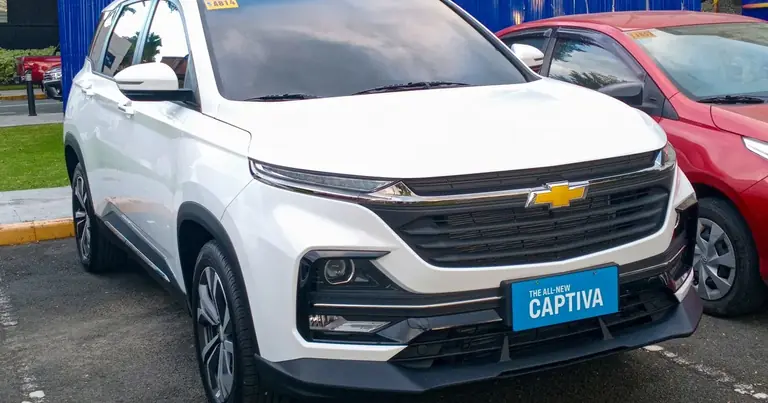
The 2021 facelift enhanced the second-generation Captiva with a gloss-black honeycomb grille, restyled LED lighting signatures, and a prominent 10.4-inch vertical touchscreen dominating the dashboard. Designed as a straightforward, accessible family crossover with seven-seat capability, it rivals vehicles like the Kia Sorento in value. Following recommended Chevrolet Captiva maintenance ensures that its electronic interfaces and forced-induction powertrain remain trouble-free.

Under the bonnet, the 1.5-litre turbocharged four-cylinder pairs with an updated CVT gearbox featuring refined stepped-shift logic. With 147 hp tasked with moving a sizable family body, keeping the turbocharger cooling circuit and synthetic oil fresh is essential to avert premature wear. The MacPherson front struts and torsion beam rear suspension require routine checks on bush and damper condition.

Suivi free

Entrez votre number plate d’number plate afin de suivre freeement votre Captiva II (facelift 2021)

Garajo prépare votre garage et vous permet ensuite de suivre les maintenances, les rappels et les points à surveiller.

UKGB

Owner notes

The reassuring points, known weak spots and deadlines you should not let slip.

Reassuring points

Reliability
  • Striking modern front styling and an upscale 10.4-inch vertical touchscreen giving the interior a modern feel.
  • Generous passenger room across all three rows with straightforward, cost-effective mechanical servicing.
  • Refined CVT programming delivers smooth, jerk-free urban progress and respectable long-distance fuel economy.

Chronic weak spots

Keep an eye on
  • 1.5 turbo engine: monitor synthetic oil condition, check intercooler boost hoses, and check for any exhaust manifold leaks.
  • CVT transmission: test for smooth engagement in stop-start traffic and verify regular fluid replacement history.
  • Engine cooling: verify cooling fan activation and check coolant expansion bottle level during hot-weather driving.
  • Suspension components: inspect front wishbone bushes and rear shock absorbers on cars frequently carrying seven passengers.
  • Central touchscreen: check for software freezes, screen lag, and confirm firmware updates have been applied.

Critical deadlines

Do not miss
  • Adhere strictly to synthetic oil changes on the 1.5 turbo to protect turbocharger journals and variable valve timing units.
  • Service the CVT fluid and internal filters on schedule to ensure long-term transmission reliability under load.
  • Check suspension alignment, tyre pressures, and brake pad wear periodically to maintain secure high-speed road holding.

Fréquences d'maintenance recommandées

Service markers for petrol/diesel versions. Exact intervals vary by engine and model year.

Oil change

Every 15 000 km

Every 1 year

Service

Every 15 000 km

Every 1 year

Brake pads

Every 40 000 km

Every 2 years

Timing belt / chain

Every 100 000 km

Every 5 years

Battery (12 V)

Every 50 000 km

Every 4 years

Powertrains and average consumption

Average consumption from manufacturer data for the versions available in this generation.

Petrol and diesel powertrains

Petrol, diesel or LPG versions. The intervals shown cover the usual mechanical jobs.

Estimated average budget

Mid-range cost

Servicing a Chevrolet Captiva II (facelift 2021) sits slightly above the market average (+16%).

Simple oil change~90
Full service~295
Front brake pads~145
Timing-belt kit~650
Tyres (set of 4)~495

* Indicative estimates for parts and labour.

Frequently asked questions about Chevrolet Captiva II (facelift 2021)

What are the common problems on the Captiva II (facelift 2021)?
Captiva II (facelift 2021) owners should especially watch: 1.5 turbo engine: monitor synthetic oil condition, check intercooler boost hoses, and check for any exhaust manifold leaks. CVT transmission: test for smooth engagement in stop-start traffic and verify regular fluid replacement history. Garajo includes these watch points so you can act early.
When should you change the timing belt on a Captiva II (facelift 2021)?
The timing belt is usually replaced every 100,000 km or 5 years on this type of engine.
Where can I find the service book for the Chevrolet Captiva II (facelift 2021)?
Garajo offers a free digital service book, always up to date, with reminders and a detailed history for your Chevrolet Captiva II (facelift 2021).
How much does it cost to service a Chevrolet Captiva II (facelift 2021)?
The service budget for a Chevrolet Captiva II (facelift 2021) sits slightly above the market average (+16%). Allow about 295 € for a full service, for example. Garajo estimates your budget by powertrain and tracks what you actually spend, for free.
Which Chevrolet Captiva II (facelift 2021) powertrain is best for town use?
This model is only available as petrol/diesel. Fuel mix: 2 petrol versions. In town, prefer the most economical, well-serviced petrol/diesel version.
Which Chevrolet Captiva II (facelift 2021) powertrain should you choose if you mostly drive on the motorway?
This model is only available as petrol/diesel. Fuel mix: 2 petrol versions. On the motorway, prefer petrol/diesel versions with the best power-to-consumption compromise.

Compatible engine oil

Which engine oil for Chevrolet Captiva II (facelift 2021)?

These links are limited to the engines of this generation when oil data is available.

Unsure between two viscosities?5W-30 vs 5W-400W-20 vs 5W-305W-30 vs 0W-30

Ne ratez plus jamais un maintenance

Gérez l'maintenance de votre Chevrolet Captiva II (facelift 2021) freeement.
Centralise your history and spending in a few clicks.Téléchargez le service book de votre Chevrolet Captiva II (facelift 2021) en PDF à tout moment.

Créer mon carnet (Free)