Plan d’maintenance Chevrolet Captiva II
Logo Chevrolet

Online service book

Logo Chevrolet

📖Chevrolet Captiva II: a global practical crossover with SAIC-GM roots

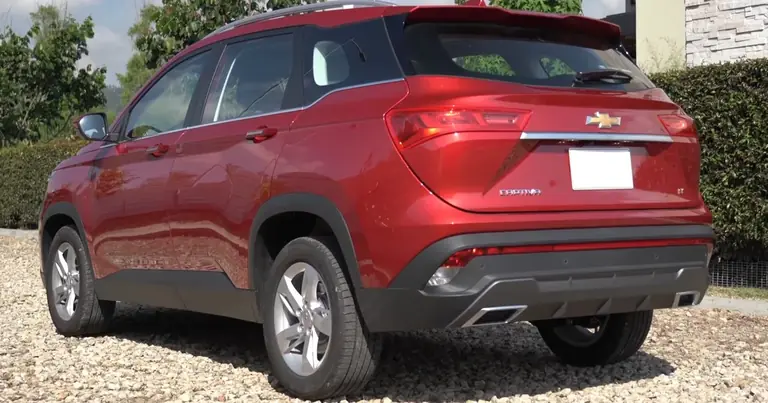
Chevrolet Captiva II (2019-2021)

The second-generation Captiva completely reinvented the nameplate, departing from its European GM Theta origins to adopt the modern Baojun 530 platform developed by SAIC-GM-Wuling. Engineered for global emerging markets, it prioritised generous cabin volume, low running costs, and flexible five- or seven-seat packaging. Competing in spirit with the Nissan X-Trail, sticking to routine Chevrolet Captiva maintenance preserves its modern powertrain and digital features.

Power comes exclusively from a 1.5-litre turbocharged petrol four-cylinder (LJO), driving the front wheels through a CVT gearbox or a six-speed manual. The small-capacity 1.5 turbo engine requires strict adherence to oil change schedules and proper cooling flushes to prevent thermal stress under heavy passenger loads. The CVT demands regular fluid maintenance to ensure smooth power delivery without belt slip.

Suivi free

Entrez votre number plate d’number plate afin de suivre freeement votre Captiva II

Garajo prépare votre garage et vous permet ensuite de suivre les maintenances, les rappels et les points à surveiller.

UKGB

Owner notes

The reassuring points, known weak spots and deadlines you should not let slip.

Reassuring points

Reliability
  • Exceptionally roomy cabin with flexible five or seven-seat layouts and a flat load floor for cargo hauling.
  • The 1.5-litre turbo engine offers honest fuel economy and lower vehicle road taxation in relevant markets.
  • Modern exterior styling with slim LED daytime running lights and a contemporary digital interior layout.

Chronic weak spots

Keep an eye on
  • 1.5 turbo engine: inspect engine oil quality, check turbocharger boost pipes, and monitor coolant temperature stability.
  • CVT gearbox: verify smooth take-off without judder, test step-ratio simulation, and check CVT fluid service records.
  • Cooling system: inspect radiator core, expansion tank hoses, and verify electric cooling fan operation in heavy traffic.
  • Chassis and running gear: inspect rear dampers and suspension bushes for signs of sag or bottoming out under payload.
  • Touchscreen infotainment: test touchscreen responsiveness, Bluetooth pairing, and reversing camera image stability.

Critical deadlines

Do not miss
  • Change engine oil and filters strictly on schedule on the 1.5 turbo engine to safeguard the turbocharger bearings.
  • Renew CVT transmission fluid within manufacturer recommendations to prevent metal belt slip and pulley scoring.
  • Inspect suspension bushes, shock absorbers, and tyre wear regularly, particularly on seven-seat models carrying heavy loads.

Fréquences d'maintenance recommandées

Service markers for petrol/diesel versions. Exact intervals vary by engine and model year.

Oil change

Every 15 000 km

Every 1 year

Service

Every 15 000 km

Every 1 year

Brake pads

Every 30 000 km

Every 2 years

Poids ou puissance élevés : usure des number platettes accélérée sur certaines versions

Timing belt / chain

Every 100 000 km

Every 5 years

Battery (12 V)

Every 50 000 km

Every 4 years

Powertrains and average consumption

Average consumption from manufacturer data for the versions available in this generation.

Petrol and diesel powertrains

Petrol, diesel or LPG versions. The intervals shown cover the usual mechanical jobs.

Estimated average budget

Mid-range cost

Servicing a Chevrolet Captiva II sits slightly above the market average (+19%).

Simple oil change~90
Full service~315
Front brake pads~170
Timing-belt kit~650
Tyres (set of 4)~495

* Indicative estimates for parts and labour.

Frequently asked questions about Chevrolet Captiva II

What are the common problems on the Captiva II?
Captiva II owners should especially watch: 1.5 turbo engine: inspect engine oil quality, check turbocharger boost pipes, and monitor coolant temperature stability. CVT gearbox: verify smooth take-off without judder, test step-ratio simulation, and check CVT fluid service records. Garajo includes these watch points so you can act early.
When should you change the timing belt on a Captiva II?
The timing belt is usually replaced every 100,000 km or 5 years on this type of engine.
Where can I find the service book for the Chevrolet Captiva II?
Garajo offers a free digital service book, always up to date, with reminders and a detailed history for your Chevrolet Captiva II.
How much does it cost to service a Chevrolet Captiva II?
The service budget for a Chevrolet Captiva II sits slightly above the market average (+19%). Allow about 315 € for a full service, for example. Garajo estimates your budget by powertrain and tracks what you actually spend, for free.
Which Chevrolet Captiva II powertrain is best for town use?
This model is only available as petrol/diesel. Fuel mix: 2 petrol versions. In town, prefer the most economical, well-serviced petrol/diesel version.
Which Chevrolet Captiva II powertrain should you choose if you mostly drive on the motorway?
This model is only available as petrol/diesel. Fuel mix: 2 petrol versions. On the motorway, prefer petrol/diesel versions with the best power-to-consumption compromise.

Compatible engine oil

Which engine oil for Chevrolet Captiva II?

These links are limited to the engines of this generation when oil data is available.

Unsure between two viscosities?5W-30 vs 5W-400W-20 vs 5W-305W-30 vs 0W-30

Ne ratez plus jamais un maintenance

Gérez l'maintenance de votre Chevrolet Captiva II freeement.
Centralise your history and spending in a few clicks.Téléchargez le service book de votre Chevrolet Captiva II en PDF à tout moment.

Créer mon carnet (Free)