Plan d’maintenance Daihatsu Xenia I (F600)
Logo Daihatsu

Online service book

Logo Daihatsu

📖Daihatsu Xenia I (F600): the 2003-2011 rugged people carrier

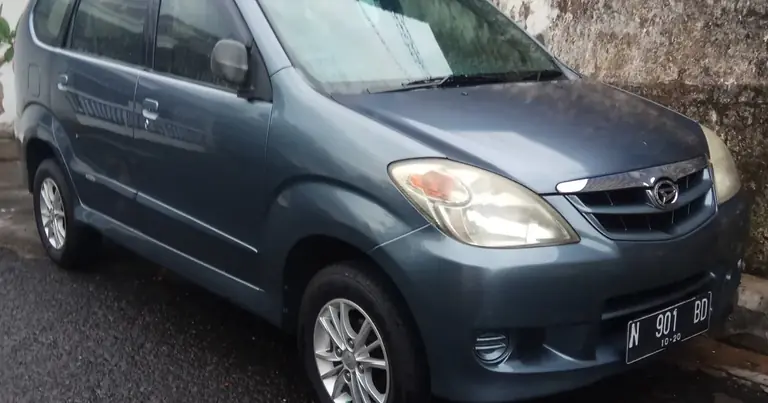
Daihatsu Xenia I (F600) (2003-2011)

Introduced in 2003, the first-generation Xenia F600 established the benchmark for utilitarian, low-cost seven-seat family transport across South East Asia. Constructed on a robust rear-wheel-drive platform, conscientious Daihatsu Xenia maintenance is essential on these workhorse MPVs, as they typically endured arduous daily family routines, high passenger payloads and challenging road surfaces with minimal downtime.

Powertrain choices centre on the 1.0-litre EJ-VE three-cylinder and the widespread 1.3-litre K3-DE four-cylinder petrol engines. While the engines are renowned for lasting hundreds of thousands of kilometres, frequent heavy hauling takes a toll on the clutch assembly, resulting in a high biting point and clutch chatter when pulling away on hills. In addition, the electric auxiliary cooling fan must be checked to prevent sudden coolant temperature spikes during prolonged stationary traffic in hot weather.

Suivi free

Entrez votre number plate d’number plate afin de suivre freeement votre Xenia I (F600)

Garajo prépare votre garage et vous permet ensuite de suivre les maintenances, les rappels et les points à surveiller.

UKGB

Owner notes

The reassuring points, known weak spots and deadlines you should not let slip.

Reassuring points

Reliability
  • Tough rear-wheel-drive commercial platform designed to haul up to seven passengers over poor roads.
  • Proven 1.0-litre EJ-VE and 1.3-litre K3 engines renowned for exceptional longevity and low-maintenance resilience.
  • Very low running costs with widely available and affordable spare parts shared with Toyota Avanza.
  • Simple mechanical layout without complex electronics, making repairs accessible to any workshop.

Chronic weak spots

Keep an eye on
  • Clutch wear under heavy passenger loads: high clutch pedal biting point and shudder when pulling away on hills.
  • Auxiliary cooling fan and thermostat: failure of the electric cooling fan causes rapid overheating in stationary traffic.
  • Front suspension wishbone bushes and ball joints: severe road conditions cause knocking over bumps and steering drift.
  • Engine mount fatigue on 1.3-litre models: degraded rubber mounts cause intense cabin vibration under load with AC switched on.
  • Solid rear axle suspension fatigue: vehicles frequently loaded to capacity suffer sagging ride height and tyre cupping.

Critical deadlines

Do not miss
  • Engine oil and filter change every 10,000 km or 12 months (5,000 km in intensive taxi/commercial service).
  • Cooling system drain, flush and coolant renewal every 40,000 km or 24 months to protect the cylinder head gasket.
  • Manual gearbox and rear differential oil changes every 40,000 km.
  • Front brake pad and brake disc inspection every 20,000 km due to frequent heavy-payload deceleration.

Fréquences d'maintenance recommandées

Service markers for petrol/diesel versions. Exact intervals vary by engine and model year.

Oil change

Every 15 000 km

Every 1 year

Service

Every 15 000 km

Every 1 year

Brake pads

Every 40 000 km

Every 2 years

Timing belt / chain

Every 100 000 km

Every 5 years

Battery (12 V)

Every 50 000 km

Every 4 years

Powertrains and average consumption

Average consumption from manufacturer data for the versions available in this generation.

Petrol and diesel powertrains

Petrol, diesel or LPG versions. The intervals shown cover the usual mechanical jobs.

Estimated average budget

Standard cost

Servicing a Daihatsu Xenia I (F600) sits in line with the market average.

Simple oil change~100
Full service~255
Front brake pads~130
Timing-belt kit~650
Tyres (set of 4)~400

* Indicative estimates for parts and labour.

Frequently asked questions about Daihatsu Xenia I (F600)

What are the common problems on the Xenia I (F600)?
Xenia I (F600) owners should especially watch: Clutch wear under heavy passenger loads: high clutch pedal biting point and shudder when pulling away on hills. Auxiliary cooling fan and thermostat: failure of the electric cooling fan causes rapid overheating in stationary traffic. Garajo includes these watch points so you can act early.
When should you change the timing belt on a Xenia I (F600)?
The timing belt is usually replaced every 100,000 km or 5 years on this type of engine.
Where can I find the service book for the Daihatsu Xenia I (F600)?
Garajo offers a free digital service book, always up to date, with reminders and a detailed history for your Daihatsu Xenia I (F600).
How much does it cost to service a Daihatsu Xenia I (F600)?
The service budget for a Daihatsu Xenia I (F600) sits in line with the market average. Allow about 255 € for a full service, for example. Garajo estimates your budget by powertrain and tracks what you actually spend, for free.
Which Daihatsu Xenia I (F600) powertrain is best for town use?
This model is only available as petrol/diesel. Fuel mix: 3 petrol versions. In town, prefer the most economical, well-serviced petrol/diesel version.
Which Daihatsu Xenia I (F600) powertrain should you choose if you mostly drive on the motorway?
This model is only available as petrol/diesel. Fuel mix: 3 petrol versions. On the motorway, prefer petrol/diesel versions with the best power-to-consumption compromise.

Ne ratez plus jamais un maintenance

Gérez l'maintenance de votre Daihatsu Xenia I (F600) freeement.
Centralise your history and spending in a few clicks.Téléchargez le service book de votre Daihatsu Xenia I (F600) en PDF à tout moment.

Créer mon carnet (Free)