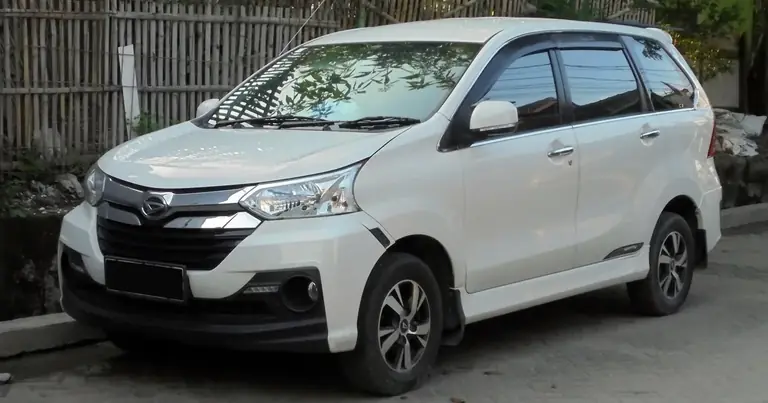
Plan d’maintenance Daihatsu Xenia II (F650, facelift 2015)
Logo Daihatsu

Online service book

Logo Daihatsu

📖Daihatsu Xenia II (facelift 2015): the arrival of Dual VVT-i

Daihatsu Xenia II (F650, facelift 2015) (2015-2019)

The 2015 facelift brought a significant mechanical leap for the Xenia F650, most notably replacing older powertrains with the refined 1.3-litre 1NR-VE engine featuring Dual VVT-i. While enhanced sound insulation and refreshed styling made the MPV more comfortable, disciplined Daihatsu Xenia maintenance remains paramount to ensure that the sophisticated hydraulic cam phasing and automatic transmissions stay in optimal health.

The new 1NR-VE engine delivers 96 hp and noticeably better fuel economy, but it demands clean engine oil to protect the Dual VVT-i actuator from varnish buildup and cold-start rattle. On automatic models, degraded transmission fluid frequently manifests as slip or rev flare during the second-to-third gear upshift under moderate throttle, making regular checks of the automatic transmission fluid vital to preserve internal friction plates.

Suivi free

Entrez votre number plate d’number plate afin de suivre freeement votre Xenia II (F650, facelift 2015)

Garajo prépare votre garage et vous permet ensuite de suivre les maintenances, les rappels et les points à surveiller.

UKGB

Owner notes

The reassuring points, known weak spots and deadlines you should not let slip.

Reassuring points

Reliability
  • Introduction of the modern 1.3-litre 1NR-VE Dual VVT-i engine offering superior refinement and fuel efficiency.
  • Extremely durable commercial-grade rear-wheel-drive chassis built to handle demanding everyday chores.
  • Low purchase and running costs combined with widespread replacement parts availability.
  • Generous 7-seat passenger accommodation within a manageable, compact external footprint.

Chronic weak spots

Keep an eye on
  • Dual VVT-i camshaft gear rattle on 1NR-VE: momentary rattle on cold start indicates varnish buildup from overdue oil services.
  • Automatic transmission 2-3 shift slip: neglected ATF fluid causes rev flare between second and third gear under gentle throttle.
  • Front strut top mounts and drop links: bumpy roads wear out upper strut bearings, producing clunking noises over speed humps.
  • Air conditioning auxiliary condenser fan: failure leads to warm cabin air and engine coolant temperature spikes in traffic.
  • Front brake discs and pads: vehicles loaded with passengers experience accelerated pad wear and disc warpage.

Critical deadlines

Do not miss
  • Engine oil and filter change every 10,000 km or 6 months using synthetic 0W-20 or 5W-30 oil to protect VVT actuators.
  • Automatic gearbox and differential fluid replacement every 40,000 km or 24 months.
  • Front suspension linkage and steering joint check every 20,000 km.
  • Spark plug renewal every 30,000 km to guarantee smooth ignition and complete combustion.

Fréquences d'maintenance recommandées

Service markers for petrol/diesel versions. Exact intervals vary by engine and model year.

Oil change

Every 15 000 km

Every 1 year

Service

Every 15 000 km

Every 1 year

Brake pads

Every 50 000 km

Every 2 years

Vehicle léger et modeste : usure des number platettes généralement modérée

Timing belt / chain

Every 100 000 km

Every 5 years

Battery (12 V)

Every 50 000 km

Every 4 years

Powertrains and average consumption

Average consumption from manufacturer data for the versions available in this generation.

Petrol and diesel powertrains

Petrol, diesel or LPG versions. The intervals shown cover the usual mechanical jobs.

Estimated average budget

Standard cost

Servicing a Daihatsu Xenia II (F650, facelift 2015) sits in line with the market average.

Simple oil change~100
Full service~265
Front brake pads~125
Timing-belt kit~650
Tyres (set of 4)~320

* Indicative estimates for parts and labour.

Frequently asked questions about Daihatsu Xenia II (F650, facelift 2015)

What are the common problems on the Xenia II (F650, facelift 2015)?
Xenia II (F650, facelift 2015) owners should especially watch: Dual VVT-i camshaft gear rattle on 1NR-VE: momentary rattle on cold start indicates varnish buildup from overdue oil services. Automatic transmission 2-3 shift slip: neglected ATF fluid causes rev flare between second and third gear under gentle throttle. Garajo includes these watch points so you can act early.
When should you change the timing belt on a Xenia II (F650, facelift 2015)?
The timing belt is usually replaced every 100,000 km or 5 years on this type of engine.
Where can I find the service book for the Daihatsu Xenia II (F650, facelift 2015)?
Garajo offers a free digital service book, always up to date, with reminders and a detailed history for your Daihatsu Xenia II (F650, facelift 2015).
How much does it cost to service a Daihatsu Xenia II (F650, facelift 2015)?
The service budget for a Daihatsu Xenia II (F650, facelift 2015) sits in line with the market average. Allow about 265 € for a full service, for example. Garajo estimates your budget by powertrain and tracks what you actually spend, for free.
Which Daihatsu Xenia II (F650, facelift 2015) powertrain is best for town use?
This model is only available as petrol/diesel. Fuel mix: 3 petrol versions. In town, prefer the most economical, well-serviced petrol/diesel version.
Which Daihatsu Xenia II (F650, facelift 2015) powertrain should you choose if you mostly drive on the motorway?
This model is only available as petrol/diesel. Fuel mix: 3 petrol versions. On the motorway, prefer petrol/diesel versions with the best power-to-consumption compromise.

Ne ratez plus jamais un maintenance

Gérez l'maintenance de votre Daihatsu Xenia II (F650, facelift 2015) freeement.
Centralise your history and spending in a few clicks.Téléchargez le service book de votre Daihatsu Xenia II (F650, facelift 2015) en PDF à tout moment.

Créer mon carnet (Free)